Table of Contents
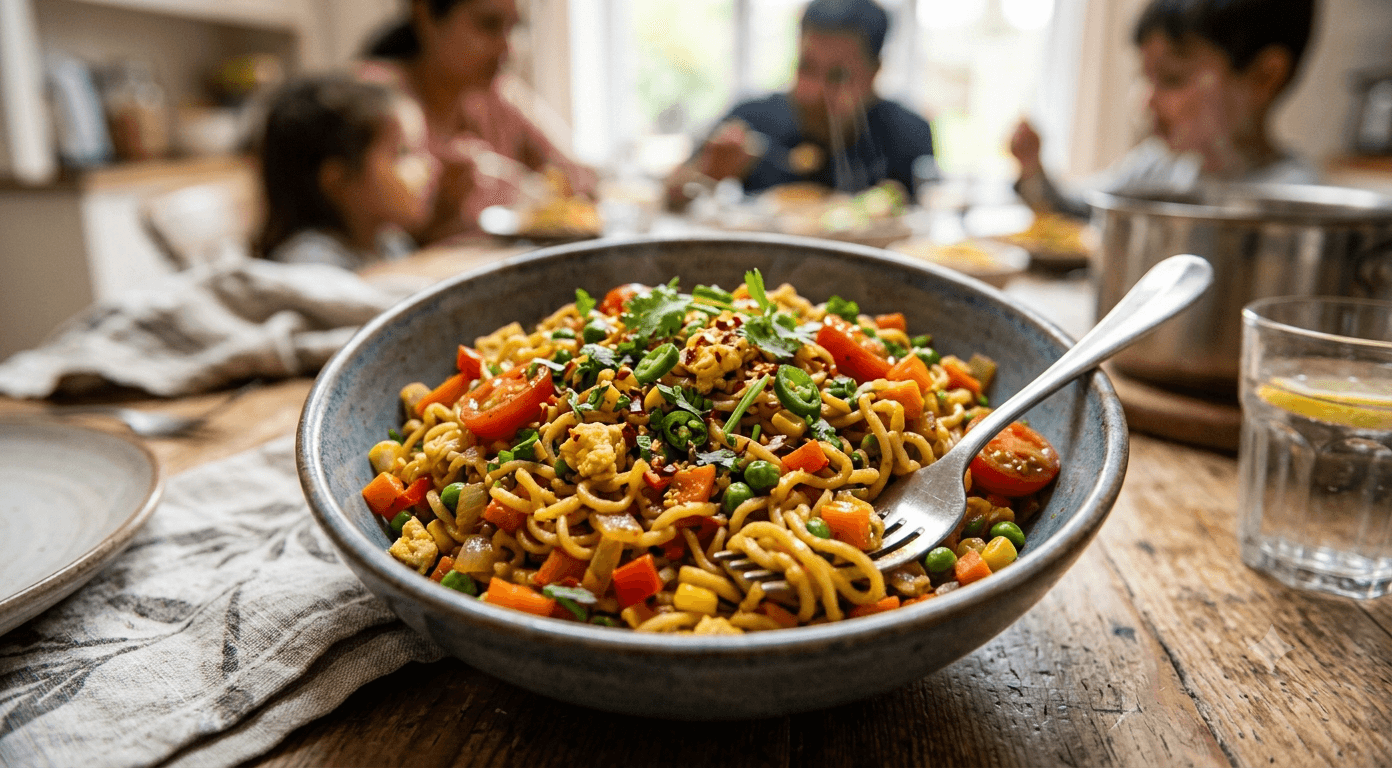
Plain Maggi is comfort food. We all grew up on it. But sometimes you want more — that smoky, onion-y, tomato-ey desi kick that makes you close your eyes and go “wah” after the first bite.
Maggi has been a pantry staple in Indian kitchens for decades, and this is the masala maggi recipe I grew up eating at my cousin’s house during summer vacations. My aunt made it in a giant kadhai on the terrace, and we’d fight over the last bits of masala stuck to the pan — I usually lost, since I was the youngest and my cousins were faster with the spoon.
It takes fifteen minutes. It uses things already sitting in your pantry. And it turns a ten-rupee packet into something that tastes like it came off a street cart in Mumbai.
“Maggi mein tadka daalna bhoolna mat, beta.” Don’t forget the tadka in the Maggi, my child.
Truer words were never spoken in my aunt’s kitchen.
Why This Masala Maggi Recipe Beats Plain Maggi
The difference comes down to one thing: a proper masala base instead of just boiling water with a sachet dumped in.
| Plain Maggi | This Version |
|---|---|
| Salty and one-note | Layers of tang, smoke, and spice |
| Soft, uniform texture | Slightly chewy, well-coated noodles |
| Gone in two minutes | Actually worth sitting down for |
Caramelised onions, softened tomatoes, and spices bloomed in hot oil — that’s the whole trick behind this masala maggi recipe. Nothing fancy, just patience for an extra two minutes.
It also scales easily. Cooking for yourself after a long day, or for three hungry cousins who showed up unannounced — same method, just double the batch. If you like this kind of fast, no-fuss fix, our crispy onion pakora recipe is another good one to keep in your back pocket for busy evenings.
Ingredients for This Masala Maggi Recipe
For the masala base:
- 2 packets Maggi noodles (classic or atta, both work)
- 1 tablespoon mustard or vegetable oil
- ½ teaspoon cumin seeds
- 1 medium onion, finely chopped
- 1 medium tomato, finely chopped, ripe and juicy
- 1 green chilli, slit
- ½ teaspoon ginger-garlic paste, freshly crushed if possible
- ¼ teaspoon red chilli powder
- A pinch of turmeric powder, mostly for colour, though it’s a spice with some genuinely good nutritional research behind it
- ¼ teaspoon garam masala
- Both Maggi tastemaker sachets
- 2½ cups water
- A handful of fresh coriander
- ½ teaspoon lemon juice, optional
Step-by-Step
1. Crackle the Cumin
Heat oil in a pan or kadhai on medium flame. Add cumin seeds and let them sizzle for about ten seconds. The kitchen should smell warm and earthy almost immediately.
2. Build the Masala Base
Add chopped onion and sauté until properly golden brown — not just soft, actually browned, which takes about 3 minutes. Add ginger-garlic paste and green chilli, stirring for 30 seconds until the raw smell disappears.
Add the tomatoes and cook until they turn mushy and start releasing oil at the edges, roughly 2 minutes. This is the part people rush, and it’s the part that matters most.
3. Add the Spices
Stir in red chilli powder, turmeric, and garam masala. Cook for 30 seconds. Some of it will stick lightly to the pan — that’s flavor, not a mistake.
4. Add Water and Tastemaker
Pour in the water, add both tastemaker sachets, and bring it to a rolling boil. Taste the water at this point — if it needs more salt, add it now, since the noodles will absorb everything from here.
5. Add the Noodles
Break the noodle cakes gently and drop them in. Cook for exactly 2 minutes, stirring occasionally to separate the strands. Keep them slightly firm — they’ll keep softening even off the heat.
6. Finish
Turn off the heat, sprinkle coriander, and add lemon juice if you like a tangy edge. Cover the pan and let it sit for one minute before serving — this is the step most people skip, and it’s the one that lets the noodles fully take on the masala.
The Part Most Recipes Skip
A few things make this version different from the dozens of “masala Maggi” videos online.
First, the onions actually need to brown, not just turn translucent. That extra minute is where the sweetness and depth come from.
Second, if you have kasuri methi on hand, crush a small pinch between your palms and add it in with the garam masala. It’s a small addition that makes the whole thing smell like it came from a proper kitchen, not a hostel room.
Third — and this one surprised me the first time my aunt pointed it out — resting the pan, covered, for that final minute makes a real difference. Skip it once and you’ll notice the noodles taste flatter.
What to Serve Alongside
Maggi works fine on its own, but a few pairings make it feel like more of a meal:
- A cold glass of something sour-sweet, like jaggery-sweetened aam panna, to cut through the spice in this masala maggi recipe
- A fried egg on top, or leftover paneer stirred in for protein
- Thin sliced onions with a squeeze of lemon and salt, on the side
Common Mistakes
Mushy noodles usually mean too much water or too much time in the pot — stick to the 2-minute mark and set a timer if you tend to lose track.
Bland Maggi almost always traces back to rushing the onion-tomato base. If the oil hasn’t separated from the tomatoes, it needs another minute.
Watery gravy means too much water went in — next time, cut it back by half a cup.
Burnt masala smell means the pan was too hot. Medium-low heat is enough for the onions and tomatoes to do their job without catching.
Frequently Asked Questions About This Masala Maggi Recipe
Can I skip the tastemaker sachet? Yes. Swap it for a tablespoon of soy sauce, half a teaspoon of chaat masala, and salt to taste. It turns into more of a desi-Chinese version, and it’s just as good.
Can I add vegetables? Definitely. Finely chopped capsicum, carrots, peas, or corn all work — add them with the onions so they have time to soften before the water goes in.
Is this a healthy version of Maggi? It’s still Maggi, so “healthy” is relative. But the onions, tomatoes, and spices add real nutrients and dial back the processed taste. Using atta Maggi and going heavy on vegetables helps if that’s what you’re after.
Can I double the recipe for guests? Yes — four packets, five cups of water, double the masala base. Cooking time stays about the same.
My Maggi came out dry. What now? A splash of hot water, a gentle stir, and a covered minute on low heat usually brings it back.
Final Thoughts on This Masala Maggi Recipe
Maggi isn’t really about the noodles. It’s the sound of rain outside the window, the 2 AM hunger after staying up too late, the first thing most of us ever learned to cook without supervision.
Add the tadka, add a little patience with the onions, and this masala maggi recipe stops being a ten-rupee packet and starts being something closer to yours.
Make it. Slurp it loud. No judgement. And if you’re after more fifteen-minute fixes for busy weeknights, our quick and easy meals collection has a few more worth bookmarking.