Table of Contents
The Perfect Gulab Jamun with Khoya (My Nani’s Secret Recipe)
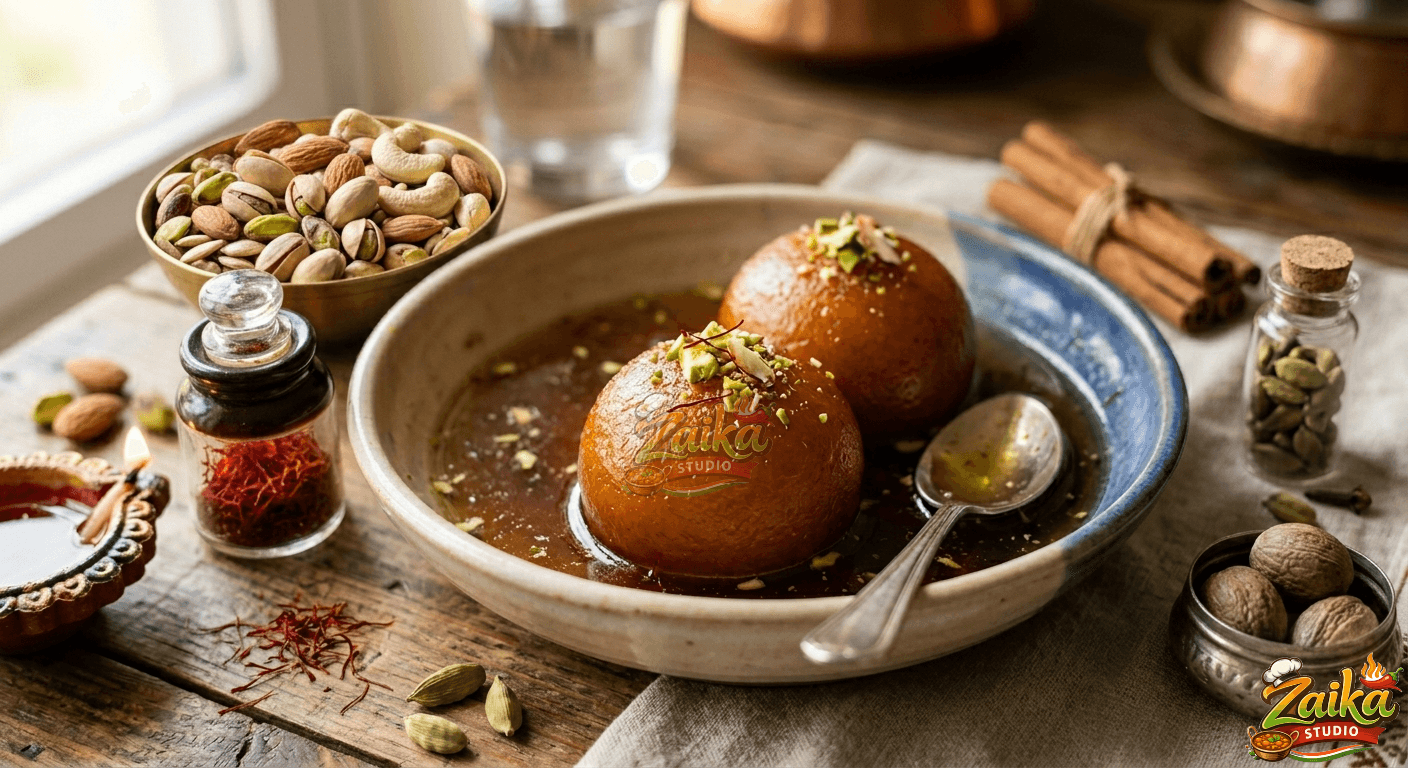
You know that feeling when you bite into a warm gulab jamun, and it literally dissolves on your tongue? That’s not magic – that’s khoya.
After years of failed attempts (hard centers, syrup that didn’t soak, cracks that looked like mini earthquakes), I finally nailed my grandmother’s gulab jamun with khoya recipe. Today, I’m handing it to you – no secrets held back.
💬 “Nani, why do my jamuns break?”
“Beta, you’re pressing too hard. And you skipped the milk powder.”
That conversation changed everything.
Why Make Gulab Jamun with Khoya Instead of Readymade Mix?
| Readymade Mix | Homemade with Khoya |
|---|---|
| Often grainy | Silky smooth |
| Artificial taste | Real, milky richness |
| Cracks easily | Stays intact |
| Unknown freshness | You control every ingredient |
Once you taste gulab jamun with khoya made from scratch, you’ll never go back. And yes, it’s easier than you think.
Ingredients for Gulab Jamun with Khoya
For the Dough:
| Ingredient | Quantity | Notes |
|---|---|---|
| Khoya (mawa) – grated | 1 cup (200g) | Fresh or frozen, not burnt |
| Paneer (grated) | ¼ cup | Adds softness |
| All-purpose flour (maida) | ¼ cup | |
| Baking powder | ¼ tsp | Not soda – powder |
| Cardamom powder | ¼ tsp | |
| Milk (warm) | 2–3 tbsp | As needed |
| Ghee (for greasing) | 1 tsp |
For the Sugar Syrup:
| Ingredient | Quantity |
|---|---|
| Sugar | 2 cups |
| Water | 2 cups |
| Cardamom pods | 3–4, crushed |
| Saffron strands | a few (optional) |
| Lemon juice | 1 tsp (to prevent crystallization) |
For Frying:
- Ghee or oil (ghee gives better flavour)
Step-by-Step Instructions (with Nani’s Tips)
1. Make the Sugar Syrup First
In a pan, add sugar and water. Boil until sugar dissolves. Add cardamom pods, saffron, and lemon juice. Simmer for 5–7 minutes until it becomes one-string consistency (when you take a drop between thumb and finger, it forms a single thread). Turn off heat. Keep syrup warm.
✅ Nani’s tip: Syrup should be warm, not hot, when you add the jamuns. Hot syrup makes them break.
2. Prepare the Dough for Gulab Jamun with Khoya
In a large bowl, add grated khoya, grated paneer, maida, baking powder, and cardamom powder. Rub everything between your palms for 2–3 minutes until the mixture looks like breadcrumbs. This step is crucial – no lumps.
Now add warm milk, one tablespoon at a time, and bring the dough together. Do not knead like roti – just gently gather. The dough should be soft but not sticky. Grease your palms with ghee.
✅ Nani’s tip: If the dough feels dry, add a teaspoon of milk. If sticky, add a teaspoon of maida. But never overwork.
3. Shape the Jamuns
Pinch small portions of dough (about the size of a marble – they will double in size). Roll them gently between your palms into smooth balls. No cracks on the surface – that’s the enemy.
Make all balls first and place them on a greased plate. Cover with a damp cloth to prevent drying.
4. Fry to Perfection
Heat ghee or oil in a deep pan on low heat. The temperature should be low and steady – if you drop a tiny piece of dough, it should take 10–15 seconds to come up and not brown immediately.
Gently slide 6–8 balls into the hot ghee. Stir slowly and continuously with a slotted spoon – this ensures even colour and no cracks. Fry until golden brown (about 5–7 minutes).
✅ Nani’s tip: Never fry on high heat. The outside will burn, and the inside will stay raw. Low and slow is the rule.
5. Soak in Syrup
Remove the fried jamuns with a slotted spoon and drain briefly on a paper towel (just 10 seconds). Drop them directly into the warm sugar syrup. Let them soak for at least 2–3 hours. They will swell and become soft.
How to Serve Gulab Jamun with Khoya
- Warm with a scoop of vanilla ice cream – heavenly.
- Garnish with chopped pistachios and slivered almonds.
- Drizzle with extra syrup and serve in a small bowl.
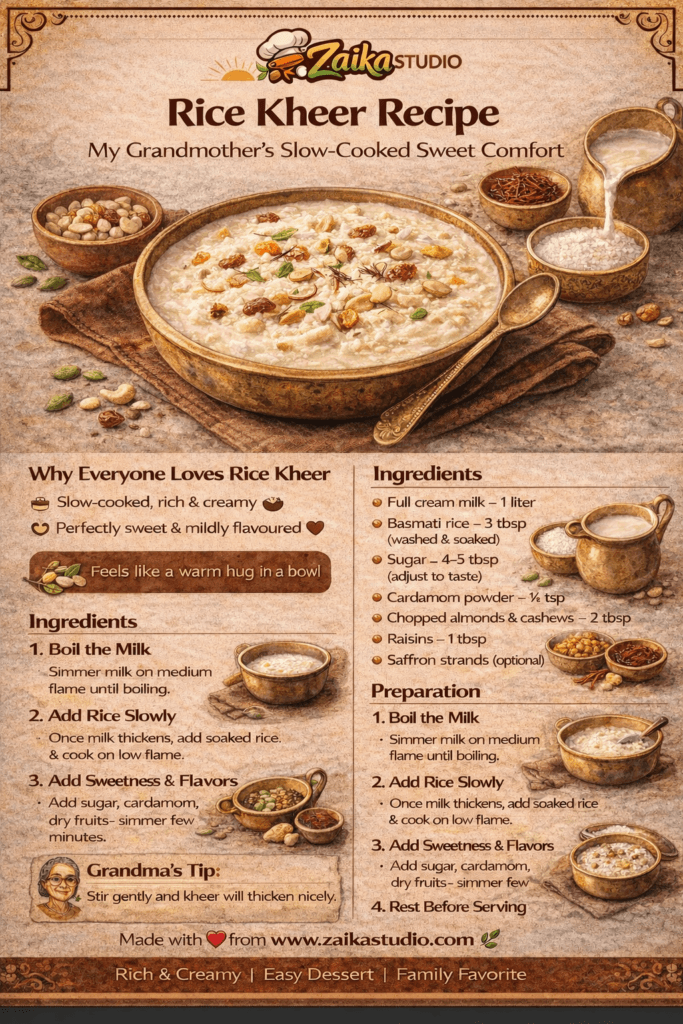
🍚 Love Indian desserts? You must try my family’s Rice Kheer Recipe – My Grandmother’s Slow-Cooked Sweet Comfort. It’s creamy, aromatic, and made with love. Click here to read the Rice Kheer recipe
Common Mistakes & Fixes (Table)
| Problem | Why? | Fix |
|---|---|---|
| Jamuns break while frying | Dough too dry OR syrup too hot | Add 1 tsp milk to dough. Cool syrup slightly. |
| Hard centre | Fried on high heat | Fry on lowest heat for longer time. |
| Cracks on surface | Over-kneaded dough OR ghee not hot enough | Handle dough like a baby. Keep ghee low. |
| Jamuns don’t absorb syrup | Syrup too thin or thick | One-string consistency is key. |
| Oily taste | Too much ghee absorbed | Drain well before putting in syrup. |
Storage & Make-Ahead Tips
- Store soaked jamuns in the syrup in an airtight container in the fridge for up to 1 week.
- To serve: Warm gently in a microwave or on a stove (low heat).
- Freeze unsoaked, fried jamuns for up to 1 month. Thaw, then soak in freshly made syrup.
Frequently Asked Questions
Can I make gulab jamun with khoya without paneer?
Yes – replace paneer with an extra 2 tablespoons of khoya and 1 tablespoon of milk powder. Texture will be slightly different but still soft.
My khoya is dry/crumbly. What do I do?
Grate it finely and add 1 tablespoon of warm milk while rubbing. It will come together.
Is this gulab jamun with khoya gluten-free?
No – maida contains gluten. For gluten-free, substitute with gluten-free flour blend + a pinch of xanthan gum (results vary).
How do I get that saffron aroma?
Soak a few saffron strands in 1 tbsp warm milk for 10 minutes, then add to the syrup.
Final Words – From My Kitchen to Yours
I still remember the first time I made this gulab jamun with khoya without Nani standing next to me. My hands were trembling. But when I bit into that warm, syrup-soaked ball and it melted… I cried a little. Happy tears.
This recipe isn’t just about ingredients. It’s about patience – low heat, gentle hands, and a sweet reward at the end.
If you make this, please leave a comment. I’d love to see your jamuns.
And if you’re in the mood for another slow-cooked dessert, don’t miss my rice kheer recipe – it’s the kind of sweet that hugs you from the inside.